Learning saxophone in Hanoi: how to choose a class and prepare for your first lesson
Want to learn the saxophone in Hanoi? How to choose a class, what to prepare for the first lesson, borrowing versus buying a horn, and why Hào Nam is the street to know.
Hanoi is the best place in the country to start learning the saxophone — and I do not say that because my studio happens to be here. I say it for an objective reason: this is the city of the National Academy of Music, of the Hào Nam instrument street, of the jazz nights that raised several generations of Vietnamese saxophonists, myself among them, from the schoolboy who entered the Conservatory in 1999 to standing in front of a jazz-faculty class today. Learning here means you are close to the source — close to good teachers, close to somewhere to try instruments, close to stages where you can listen and dream.
This article is for anyone with the idea already forming: what to prepare, how to choose a class, and what the first lesson actually looks like.
Choosing a saxophone class in Hanoi — what to look at
Hanoi has no shortage of music schools, so the right question is not “who teaches” but “which class suits me”. Four criteria I would suggest weighing — even if you do not end up studying with me:
The teacher genuinely specialises in saxophone. The saxophone is a wind instrument with its own particular demands on embouchure and air column; a piano or guitar teacher covering it as a sideline will struggle to guide you at exactly the level that matters most. Ask directly: where did they study saxophone, where do they perform? A serious teacher will be glad you asked.
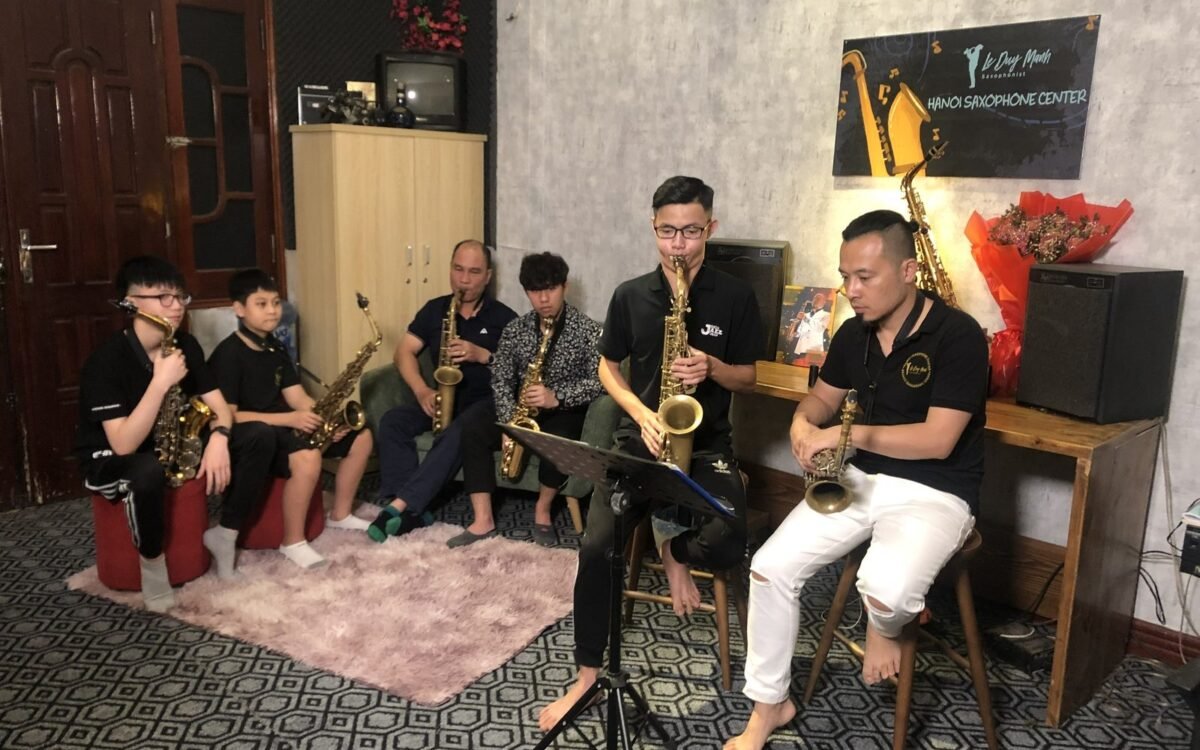
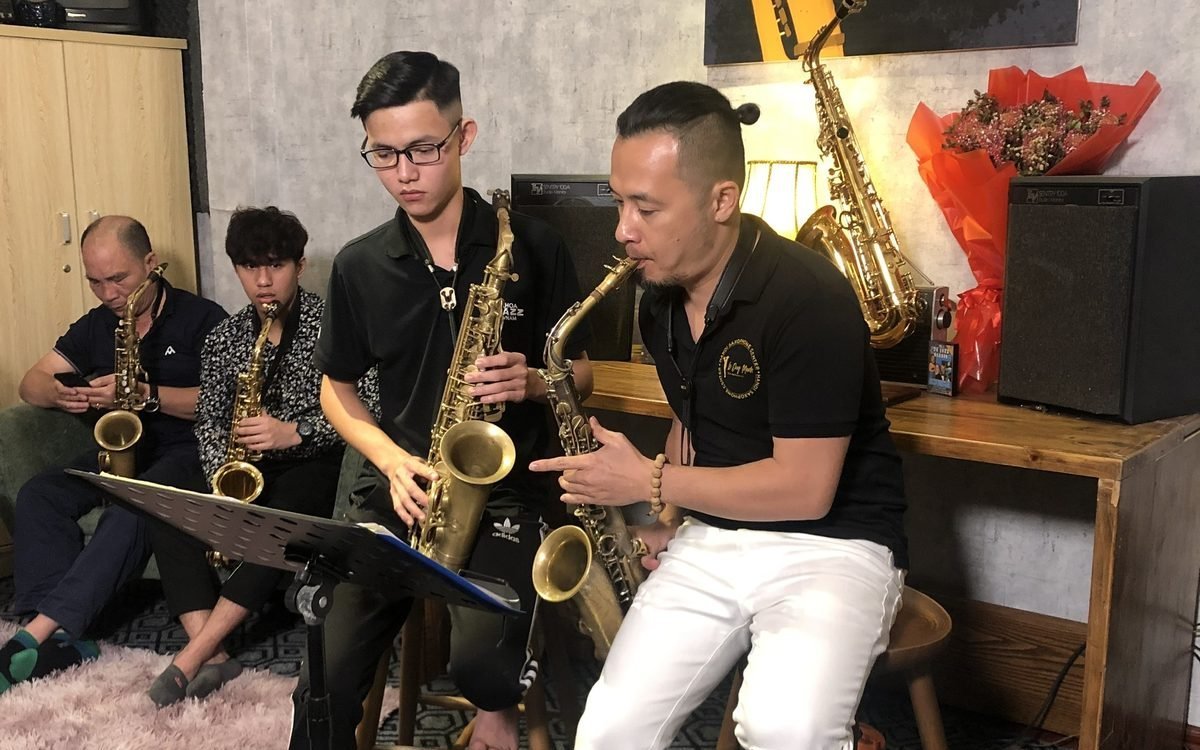
The class is small enough for your breathing to be corrected individually. With a wind instrument, the early stage needs someone to hear and watch you play each note. A big class has good energy, but the foundation needs close attention — ideally a small group or one-to-one.
There is a clear syllabus, not lesson-by-lesson improvisation. You should be told where you will be after three months and after six. A properly written course, lesson by lesson — the way I built the beginner course — is a long way from a teacher thinking up something each week.
You can take a trial lesson before paying. Somewhere confident in its teaching will not hesitate to give you one. It is also your chance to check the thing that matters most: are you comfortable with this teacher?
No horn yet — not an obstacle
This is the misunderstanding that makes people postpone for a year: “I will buy a saxophone first, then take lessons.” The right order is the opposite: learn first, buy later.
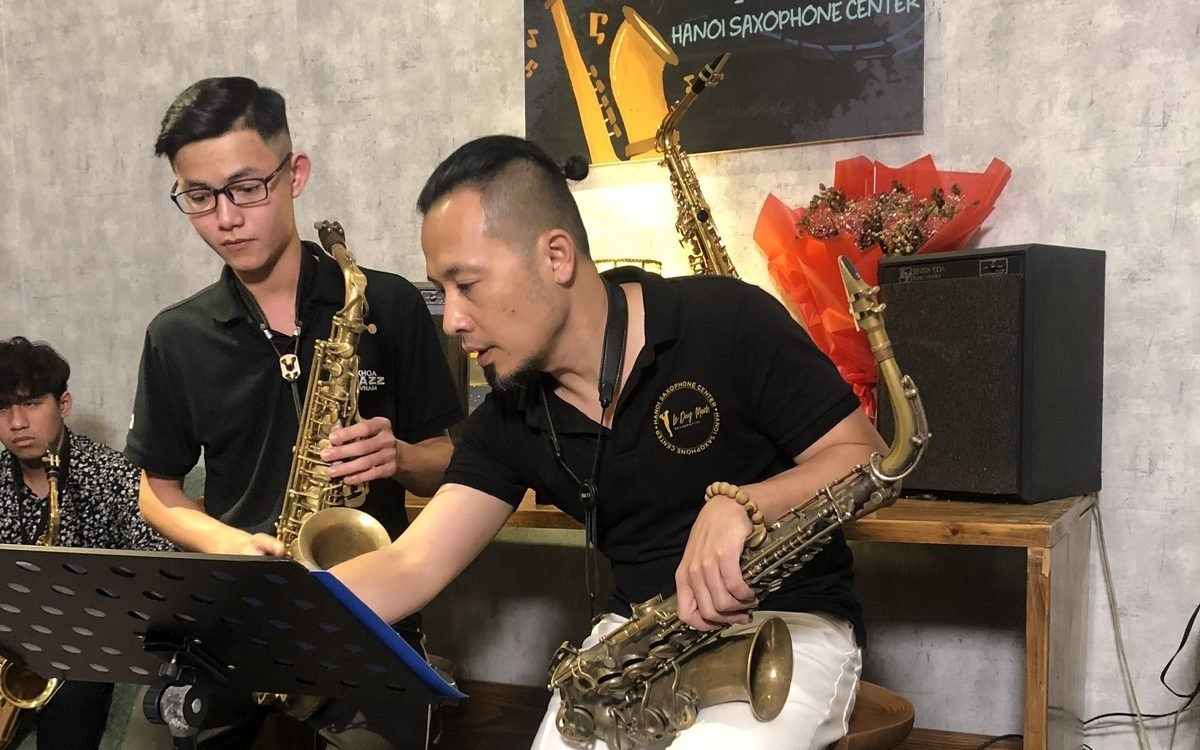
At my studio new students borrow a horn during the lesson — come empty-handed, take a few lessons, work out whether you suit alto or tenor, and only then think about buying. That avoids a situation I have seen more than once: someone buys a tenor because they idolise a tenor player, starts lessons, and discovers their hands are much happier on an alto.
And when the time comes to buy, learning in Hanoi gives you an advantage found nowhere else: Hào Nam street — the best-known instrument street in the country, where you can try dozens of horns in an afternoon. My studio is at number 39 Hào Nam, so “finish the lesson, go and try some horns, photograph the one you like and ask the teacher” is a well-worn student habit. Trying real instruments with somebody qualified listening alongside you is the right way to buy one.
What happens in the first lesson?
So that you can stop being nervous, here is a typical first session:
- A conversation (15 minutes): why you want to learn, the piece you dream of playing, how much time you realistically have. I need to hear this first — the route for someone who wants to play one piece for their wife on an anniversary is not the route for someone aiming at jazz long-term.
- Meeting the instrument: fitting the reed, the strap, how to hold it — and the first keys.
- Breathing exercises: learning to breathe from the belly — the foundation of everything afterwards.
- Your first sound: usually on the mouthpiece, then on the whole horn. First sounds are rarely beautiful — and that is entirely normal for everybody.
- Settling the plan: based on what I have heard and seen, I recommend the course that fits. I do not advise everyone to take a long course; some people need only a few well-aimed lessons.
The only preparation you need to bring: the piece you most want to play — and a relaxed frame of mind. The horn, the reed and the first-lesson material are all here.
Where in Hanoi is convenient?
My studio is at 39 Hào Nam, Ô Chợ Dừa, Đống Đa — the central area west of Hoàn Kiếm lake, under ten minutes from the Temple of Literature, easy to reach from Ba Đình, Cầu Giấy, Thanh Xuân and Hai Bà Trưng. My students are a full mix: office workers in the evening, retired people in the morning, children at the weekend. Lessons are scheduled around your time, including fully flexible one-to-one tuition.
Outside lesson hours, do not waste the privilege of studying music in Hanoi: the jazz nights in the Old Quarter clubs, the Academy’s concert programmes — listening live is as much a part of learning as class time. From time to time the studio organises a group outing when I have a performance on, so students can see that the road from the practice room to the stage is shorter than they think.
If you have read this far, the only thing missing is probably an appointment. Book a free trial session or call 0389172879 — MSax – Lê Duy Mạnh Saxophone Center, 39 Hào Nam, Đống Đa, Hanoi. Bring the piece you love; the studio will take care of the rest.