How long does it take to learn the saxophone? A realistic timeline
How long does it take to learn the saxophone? A realistic stage-by-stage timeline — from the first weeks on embouchure to playing with a voice of your own in year two.
This is the question I hear most often when a new student comes to enrol — from people in their forties and from children in year four alike. The honest answer is that there is no single number, because “being able to play” means something different to each person. But measured against steady practice, I can share milestones that match what I have actually seen over many years of teaching.
What does “being able to play” mean, before we ask how long
We need to agree on the level, because these are three very different things:
- Producing a clean, steady sound — no rasp, no choking, no drifting pitch mid-note.
- Playing a familiar piece all the way through — reading it (or from memory) and getting to the end without breaking down.
- Playing confidently in front of people, with a voice of your own — a line with something to say, right not only in the notes but in the breathing and the feeling.
Most students picture the second level — playing a whole piece for someone they love, or standing up at a reunion or a family event. The milestones below are measured against that.
Stage by stage
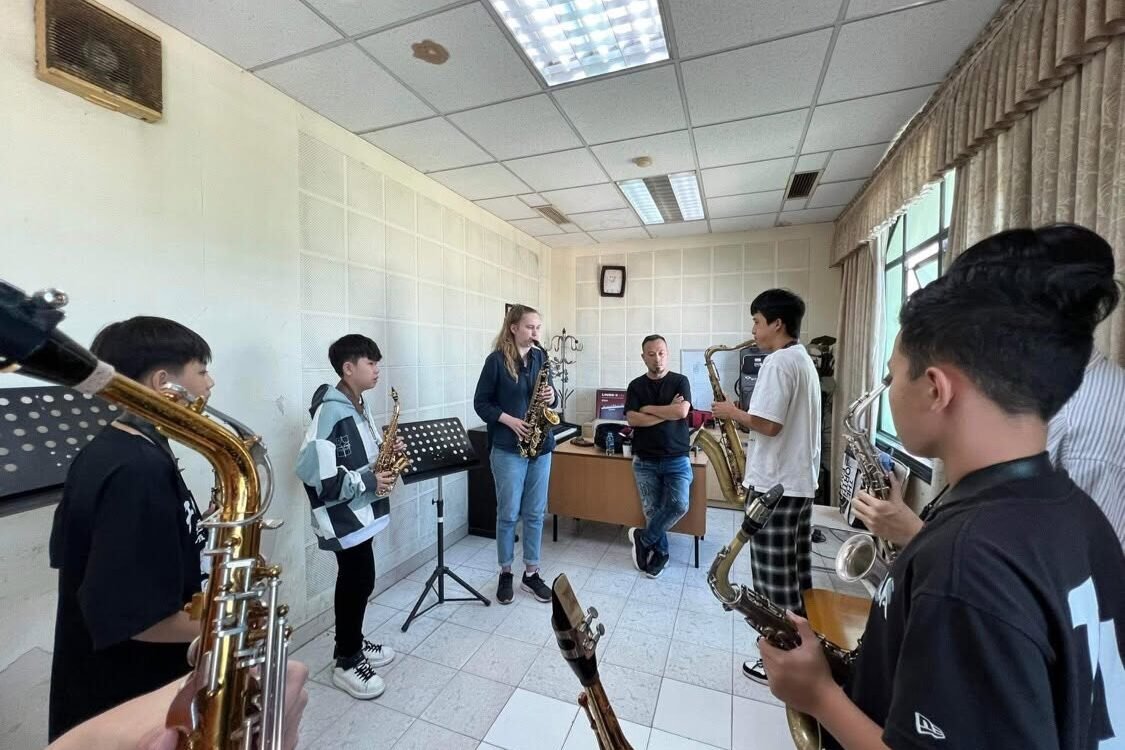
Weeks 1–4: The most important stage and the least noticed — getting used to the embouchure, learning to breathe from the belly, and producing a steady sound on the first few notes. An embouchure set wrong at the beginning is very hard to correct later, so I give the whole first month to this foundation rather than rushing into pieces.
Months 2–3: Students start reading simple music and joining notes into short melodies. This is where the pleasure begins — hearing a tune you recognise come out of your own horn.
Months 4–6: Most students can play a complete piece at a moderate tempo — enough for a small performance at home, a birthday party, or a video worth keeping. For anyone practising regularly this is the “I can play” milestone as most beginners mean it. (Students on the beginner course at two lessons a week usually reach it earlier, around lessons 12 to 24.)
After a year: the fingers are more fluent, the breath longer; you can play in a small group and handle pieces with more complicated rhythm.
After two to three years of serious practice: this is where your playing starts to have a colour of its own — not just the right notes but something to say, a warm, unvarnished tone that belongs to you rather than an imitation of somebody else.
What decides whether you move fast or slowly
Two factors matter more than talent:
Practising regularly. Fifteen to twenty minutes a day gives markedly better results than cramming two or three hours at the weekend. The embouchure and breathing muscles need a daily reminder to build a reflex, exactly like physical training.
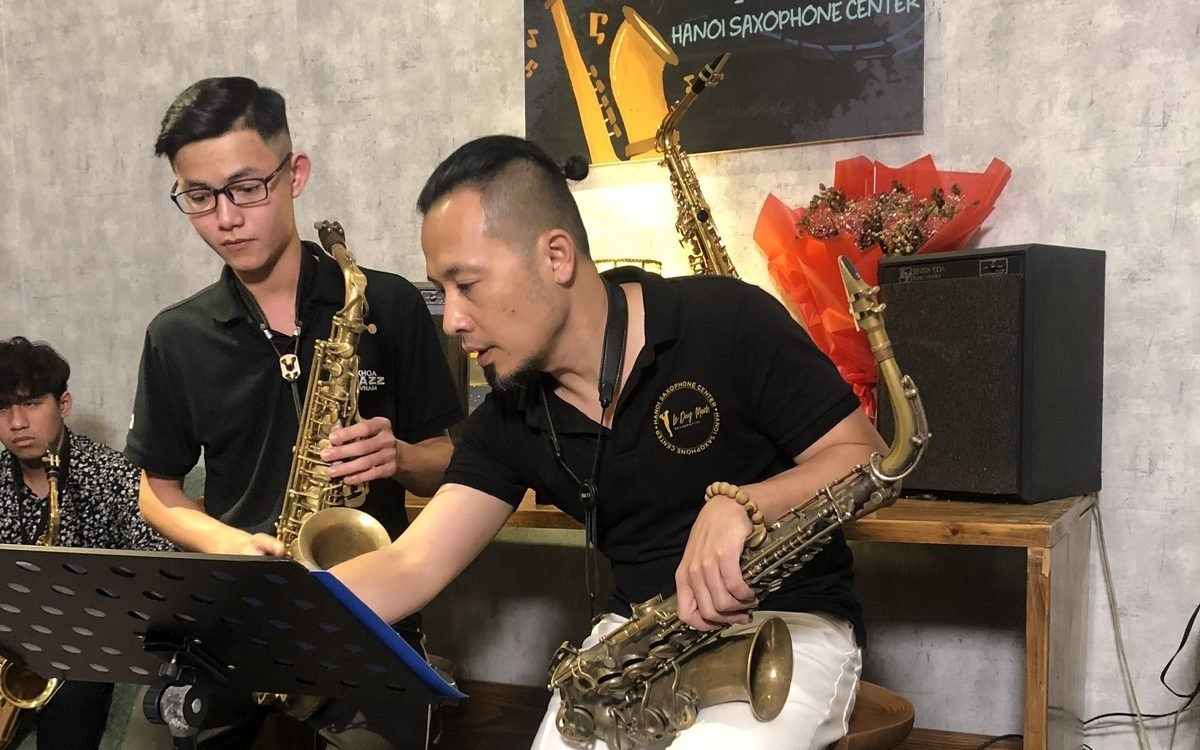
Having your embouchure and breathing corrected from the start. This is what I stress with every new student: fixing a wrong habit after six months is far harder than learning it right on day one. Close guidance in the early stage saves you a great deal of time later.
And age, or prior knowledge of theory? Honestly, they matter far less than people think. I have taught students close to fifty who had never touched an instrument, and six months later they played a whole Trịnh Công Sơn song at a family gathering. What counts is regularity, not the starting point.
Three things that shorten the road
If you want to reach “I can play” sooner than average, my experience comes down to three:
- Choose a piece you love, right at the start. Motivation is what runs out fastest in month two — one piece you genuinely want to play is worth more than any amount of encouragement.
- Record yourself once a week. A phone is enough. Your ears while playing and your ears listening back are two different people; the recording shows you the real progress, and the real mistakes.
- Do not skip the foundation to get to the music faster. It sounds backwards, but students who put in honest breathing and long-tone work in the first month go faster later than the ones who dive straight into melodies — because they never have to come back and repair the foundation.
If you are considering learning saxophone in Hanoi and want a clear plan that fits the time you actually have, I always give the first session to listening to each student’s goal before building their syllabus — because everyone has their own reason for starting, and the journey should begin from that reason. Contact MSax – Lê Duy Mạnh Saxophone Center — 39 Hào Nam, Đống Đa, Hanoi.