Can you teach yourself the saxophone at home? An honest answer from a teacher
Can you teach yourself the saxophone at home? An honest answer from a teacher: what you can learn alone, the two things you almost cannot, and the hybrid route that saves a year of guessing.
I know this article looks like it argues against my own interests — a man who makes his living teaching, writing about teaching yourself. But precisely because I have taught for a long time, I have met both kinds of player: self-taught musicians good enough to impress me, and self-taught players who arrived after two years with a set of wrong habits that took me months to unpick. So my honest answer is: yes, you can — provided you know exactly what can be learned alone and what cannot. This article draws that line.
What you can absolutely learn on your own
The good news first. A substantial part of the saxophone journey is within reach of anyone patient enough:
- Basic theory — reading notes, understanding time, scales. The free material and videos available now are genuinely good, and you can study them at any hour.
- Fingering and scales — once your sound is stable, running scales and finger exercises with a metronome is pure honest labour; with a fingering chart you can do it yourself.
- Your ear — active listening (hear a phrase, sing it back, find it on the horn) is one of the most valuable exercises there is, and no teacher can do it for you.
- Repertoire — learning melodies, finding sheet music, building your own list of pieces you love.
If you already have a foundation — you played a wind instrument before, or another instrument well — then teaching yourself at home to maintain and extend is entirely realistic.
Two things you almost cannot teach yourself
Now the part I have to say plainly. The saxophone has two foundations where teaching yourself hits a physical obstacle — nothing to do with how hard you work:
Breathing. A correct breath comes from the belly and ribs, with the shoulders still and with support as you play out. The problem: you cannot see yourself — you do not see the shoulders lifting, you do not feel the chest tightening, because from the inside everything “feels normal”. A tutorial video describes it correctly, but it cannot see you and say “there, right there”.
Embouchure. How much mouthpiece you take, how loose the jaw is, where the lip sits — a few millimetres changes the sound completely. A self-taught beginner almost always bites too hard, because at the start that makes the note speak more easily. And that “easier at the start” is the trap: it becomes a ceiling that stops you ever reaching the warm, thick tone you are after.
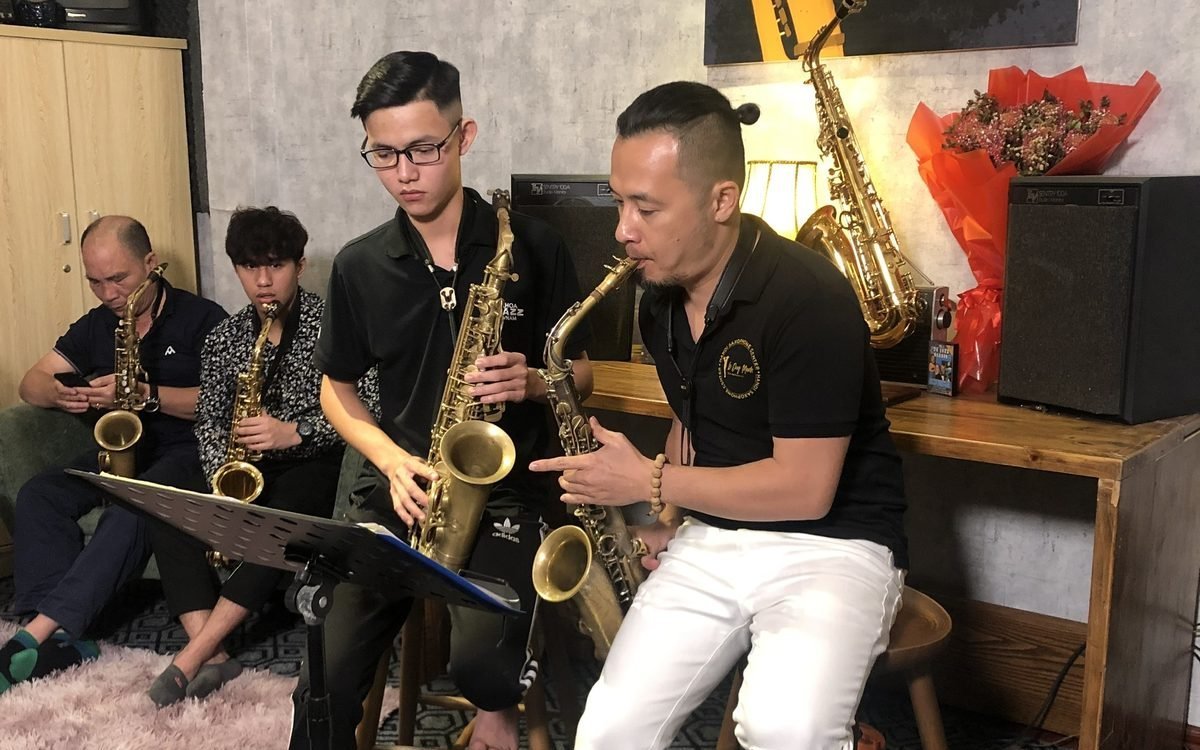
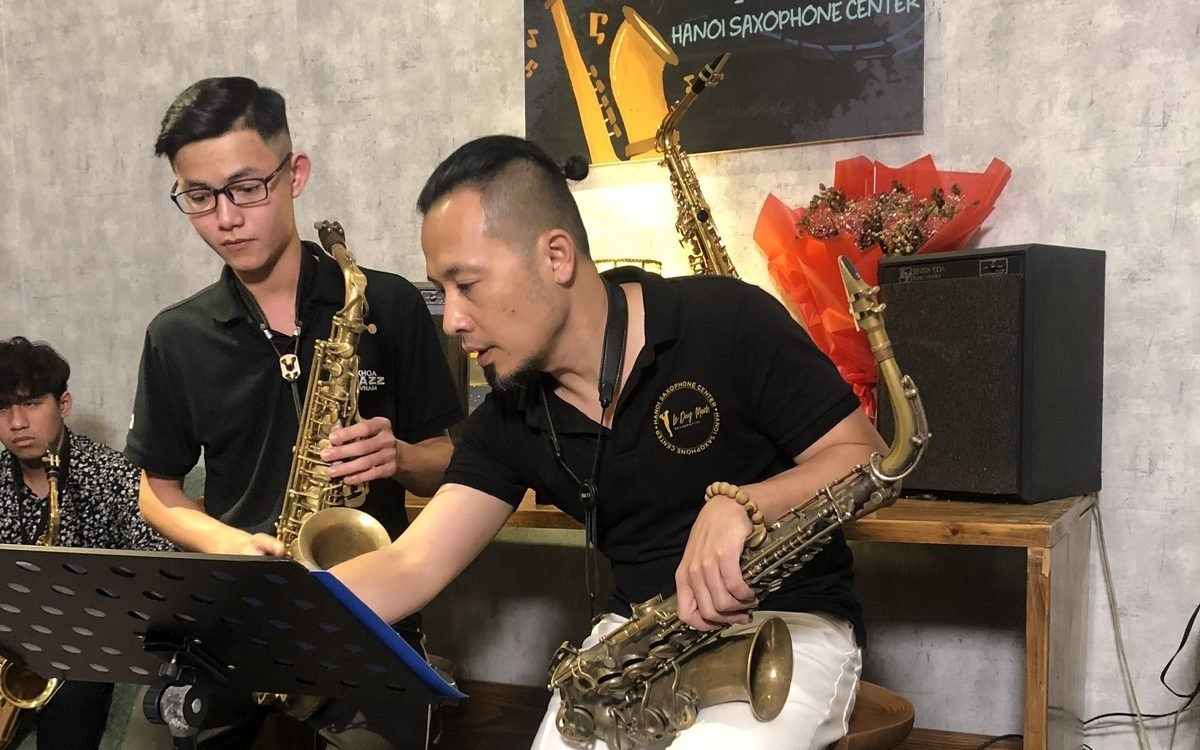
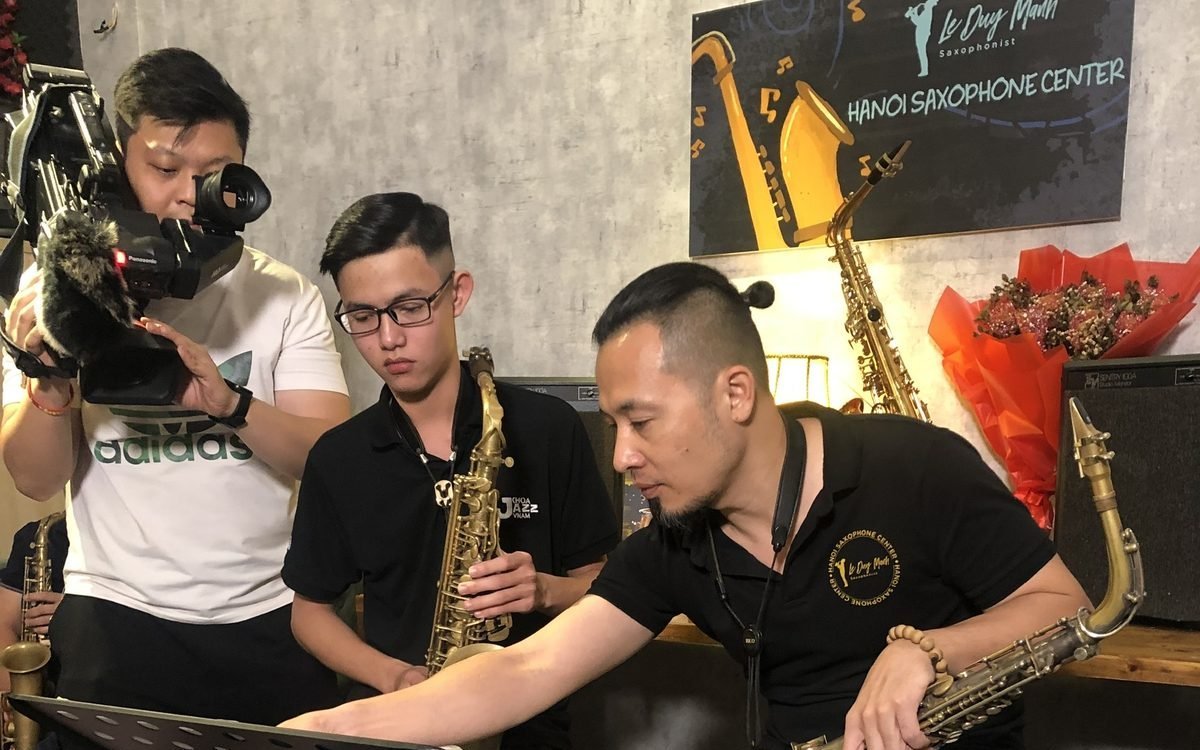
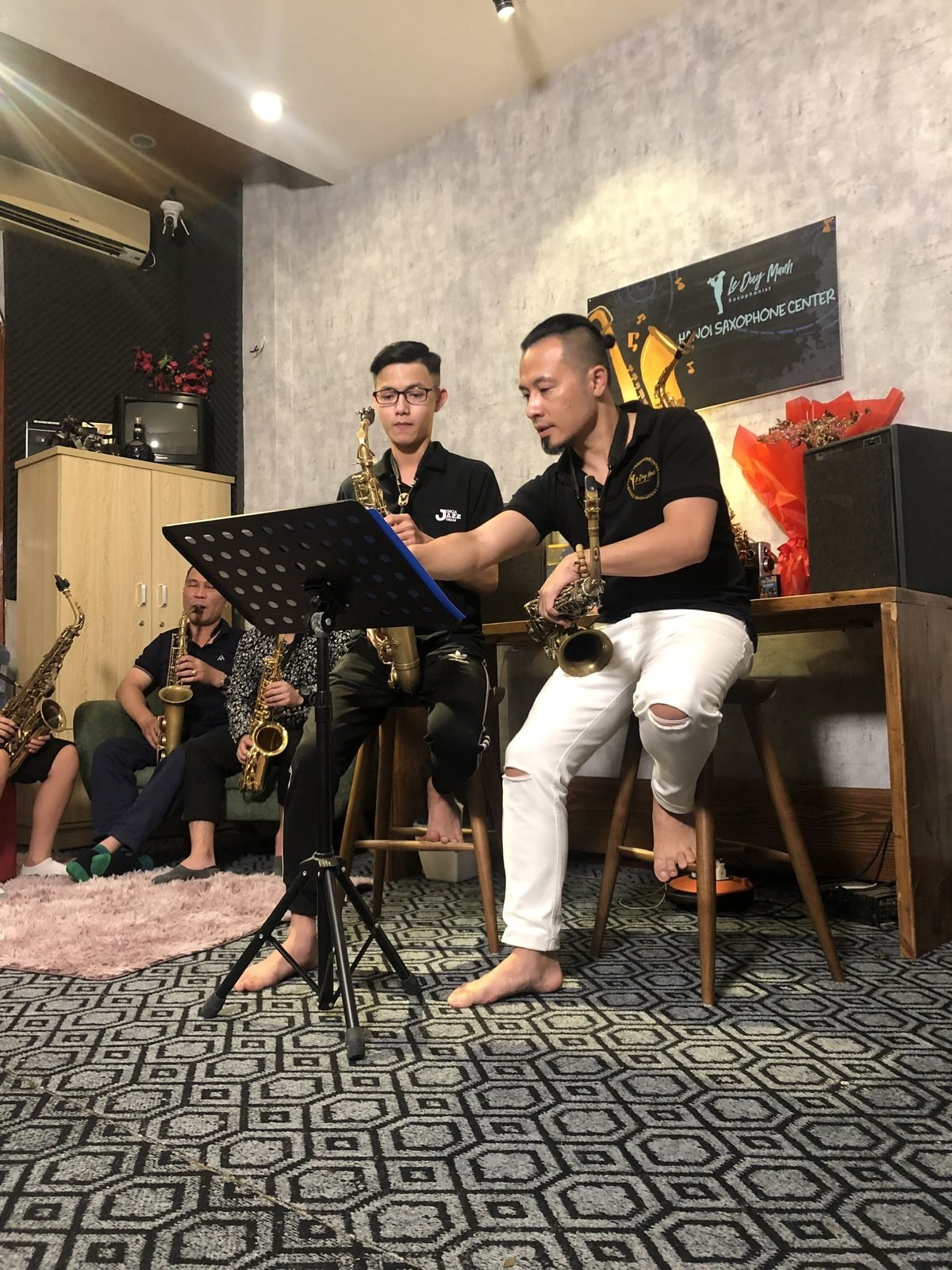
Both of these need a trained eye and ear watching you while you play — the one thing a one-way video cannot provide.
The real risk: wrong habits becoming reflexes
What I most want you to weigh is not “will teaching myself be slower” — it is the cost of correction. The body does not distinguish right habits from wrong ones; it only remembers what is repeated. Practise thirty minutes a day for a year with a clenched embouchure and you have a wrong reflex reinforced three hundred times — and unpicking an ingrained reflex is many times harder than learning correctly from the start. Long-term self-taught students arriving in my class usually need a few months just to reset, which is the most expensive and most discouraging stretch I have watched anyone go through.

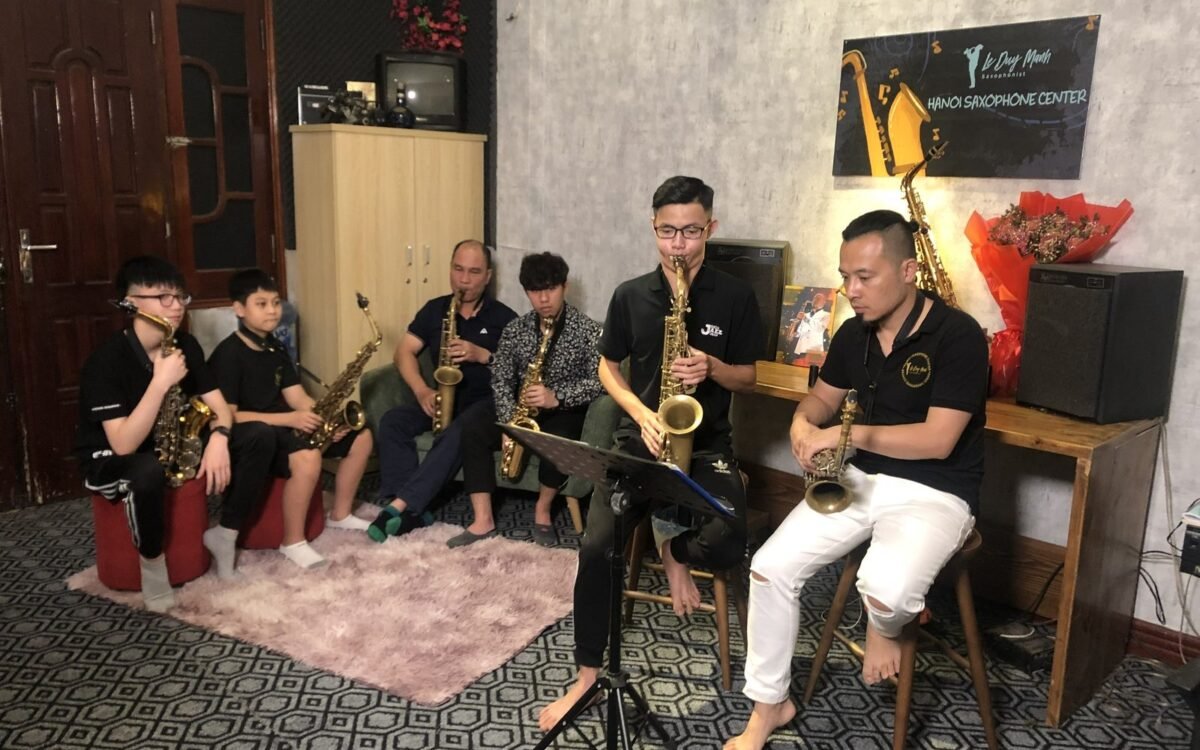
And there is one more thing practising alone never provides: playing with other people. Blending into a horn section, listening to the player beside you and adjusting — that is both a skill and the greatest pleasure in music, and a practice room at home cannot recreate it.
The sensible hybrid: taught foundation, self-directed growth
After years of watching, the most effective formula I have seen — in both money and time — is hybrid:
- The foundation stage (roughly the first three months) — with a teacher. This is when every basic reflex forms: breathing, embouchure, posture, tone production. Invest here and you buy the most expensive thing there is: certainty that you are practising correctly. That is exactly the philosophy behind the 24-lesson beginner course.
- After the foundation — mostly self-directed, with periodic check-ups. Once you know what correct feels like, most of your progress comes from your own practice along a clear plan. Many of my students move after the foundation course to a monthly lesson — a “health check” for their sound. The cost drops sharply and there is no risk of drifting off course.
A home practice kit
Whichever road you choose, these are the tools I recommend every student have for their own practice:
- A metronome — a free app is enough. Practising without time is practising by halves.
- A tuner — to check pitch on long tones; a beginner’s ear cannot yet trust itself.
- A phone to record yourself, once a week — the most underrated tool of all. Your ears while playing and your ears listening back are two different people; the recording is the truth.
- A mirror — to check shoulders and embouchure, standing in for part of a teacher’s eye.
- A small number of chosen videos — learn from a few consistent sources rather than a different channel every day (each school has its own setup, and mixing them is confusing). My own YouTube channel has recordings and tutorial and lesson videos if you want a reference for what a settled sound is like.
When you definitely should find a teacher
A short checklist — if two or more of these apply, it is time:
- Two or three months of steady practice and the sound is still choked, thin or rasping for reasons you cannot identify.
- Your lip, throat or shoulders hurt after every session (a sign of wrong technique — do not push through it).
- You cannot get up into the high register, or the low notes are nearly mute, whatever you try.
- You feel stuck: every new piece snags on the same old problem.
- You are about to buy an instrument and nobody has ever heard you play in person.
Teaching yourself is not the wrong road — it just needs to be put in the right place in the journey. If you are self-taught and want to know whether you are heading in the right direction, the cheapest way to find out is a free trial session at the studio: bring your horn (or come empty-handed), play for five minutes, and I will tell you honestly where you are fine and where you are stuck — including if the advice turns out to be “carry on by yourself, you are doing well”. MSax – Lê Duy Mạnh Saxophone Center — 39 Hào Nam, Đống Đa, Hanoi, telephone 0389172879.