Learning the saxophone in Hanoi with no musical background: where to start
Want to learn the saxophone in Hanoi but cannot read music and have never held a horn? That is a normal place to start — here is the order to do things in.
Looking for saxophone lessons in Hanoi but you cannot read music, have never read a note, have perhaps never held a horn? That is an entirely normal place to start. For a beginner, what matters is not knowing a lot of theory beforehand but taking things in the right order from the beginning — so the sound comes out properly, playing is less tiring, and you do not have to unpick expensive mistakes later.
Can you learn the saxophone with no musical background?
The short answer is yes. Plenty of people start the saxophone from zero: no theory, no familiarity with rhythm, no idea of the difference between note values. The question is not whether you “have natural talent” — it is whether you begin the right way.
With the saxophone, beginners worry most about three things: not knowing how to breathe, not knowing what to do with their mouth, and not getting a sound. All three are basic technical matters, not barriers that only people who “know music” can cross. Guided step by step, anyone can get to know the instrument from a very low starting point.
What actually discourages beginners is not the horn but doing things in the wrong order. Some people rush at a piece, watch a video and copy the melody before their sound is anywhere near stable. The more they practise, the more tiring it gets: sore lips, a choked sound, notes that speak sometimes and not others. The feeling of “the saxophone is not for me” arrives early — when the real problem is method.
In Hanoi, the people looking for saxophone lessons are usually working adults, students, or parents looking for a class for their child. All three start from different places but want the same thing: a clear route that is easy to follow and does not kill the enthusiasm in the first few weeks.
Start with breathing, embouchure and tone production
If you are new to the saxophone, the first thing is not fast fingers or a familiar tune. The right foundation starts with breathing, embouchure, and making the horn produce a clean, even sound without forcing.
Breathing on the saxophone is not simply “blow hard”. Beginners tend to use the neck and shoulders, which makes the tone harsh, runs the air out quickly and is exhausting. The right way is to learn the feel of a steady push of air with the upper body relatively relaxed and no tension in the neck. Just knowing how to use the air properly makes the sound far more solid.
The embouchure is the other place things go wrong. Many people bite too hard for fear the horn will not sound, or hold it too loosely, which makes the note waver and hiss. In a lesson, a teacher adjusts very small details: where the lower lip sits, how the mouth wraps the reed, the angle of the neck, where the upper teeth rest. They look like small things and they decide whether your sound is beautiful.
A good foundation lesson turns on very basic matters:
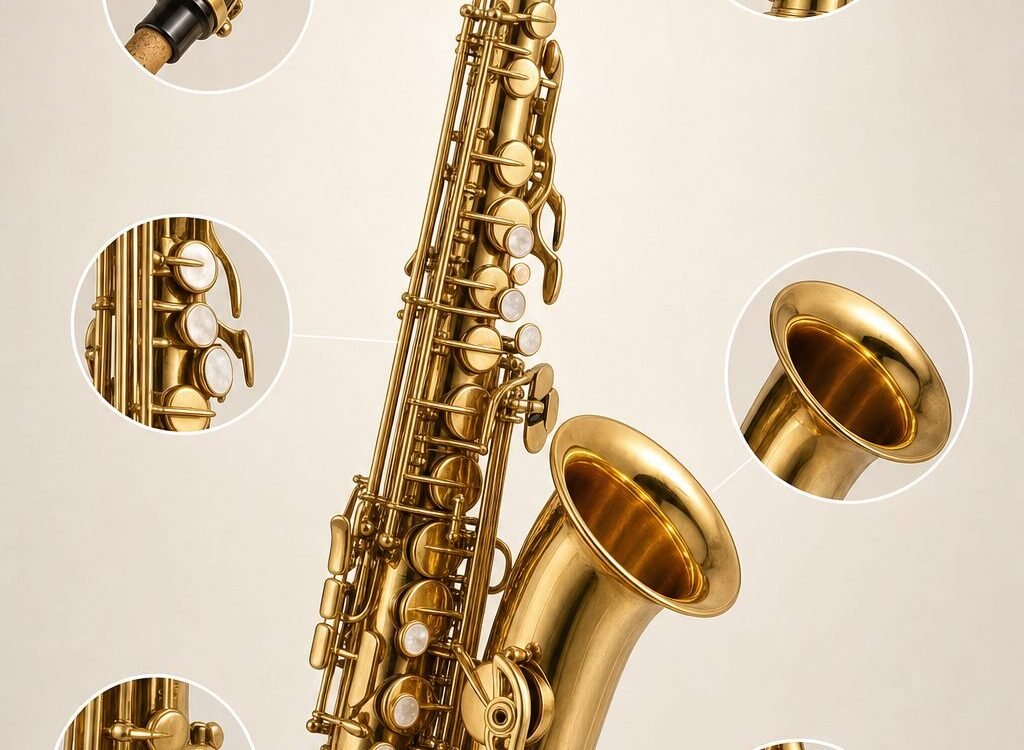
- Assembling the horn and holding it in the right posture
- Breathing so you do not run out of air or tense the neck
- Positioning the mouth so the sound is round and does not hiss
- Producing a clean first note
- Hearing and recognising when you are playing something wrong
Once you can produce a steady sound, reading notes, fingering and playing pieces all become much easier. This is why a beginner should not rush. A correct sound from the outset is worth more than memorising a passage you are playing with the wrong technique.
A proper foundation saves the time you would spend correcting
When learning an instrument, correcting an old fault is usually harder than learning something new. With the saxophone this is especially true. Once the body is used to breathing wrongly, holding the mouth wrongly or sitting wrongly, it takes a good while to lose the habit.
A very common example: somebody teaches themselves at home from short clips online. At first a sound comes out, so it seems fine. After a while, though, the tone is always stifled in one particular register, the tonguing is unclear, or the low notes will not speak. Going back to lessons, the teacher has to return to the root: how you breathe, how you take the reed, how you support the air. It is fixable, but certainly slower than learning correctly in the first place.
A good foundation does not mean a heavy diet of theory. It only means every step has a clear purpose. Today, practise until the sound is even. Next session, hold it steadier. Then move on to fingering, rhythm and phrases. It sounds slow and is in fact faster, because you are not constantly going back to repair things.
For anyone busy with work the benefit is clearer still. You only have a little time each week, so practising wrongly wastes almost all of it. Practise with specific corrections and a clear idea of what to work on at home, and the progress is much more reliable.
People looking for saxophone lessons usually want to know “how long until I can play”. Realistically it depends on how much you practise, but one thing is nearly always true: someone who builds the foundation properly saves time on someone patching one thing after another. There is a fuller answer in how long it takes to learn the saxophone.
Choosing somewhere in Hanoi you will keep going to
Choosing where to learn is not only choosing what is near your house. For a beginner, what matters more is whether it helps you keep going long enough to see yourself improve. A few practical criteria:
First, whether the teaching genuinely starts from someone who knows nothing. Plenty of places suit people who already have a foundation better than they suit an absolute beginner. If you cannot read music, favour somewhere that can explain clearly and work from breathing, embouchure and tone production before repertoire.
Second, location and scheduling. Working adults drop out easily if the journey is too long or the timetable too rigid. If you are in the centre of the city, 39 Hào Nam, Ô Chợ Dừa, Đống Đa, Hanoi is worth considering for how easy it is to reach from the inner districts.
Third, how closely you are followed. The saxophone needs a great deal of listening and direct correction in the early stage. Consider:
- Does the teacher work carefully on your tone production and breathing?
- Is the route suitable for a complete beginner?
- Is the timetable flexible enough to keep up long-term?
- After a lesson, do you know exactly what to practise at home?
Somewhere suitable does not have to promise anything grand. It is enough that you feel your actual mistakes are being identified, that you understand where you are stuck, and that you want to come back next time. There is more on choosing in learning saxophone in Hanoi.
Why one-to-one often suits beginners and busy people
For beginners, one-to-one lessons often work well because early saxophone problems are so individual. Two people can both be failing to get a sound, and one is going wrong in the air, one in the lip, one in how they take the reed or hold the horn. Learning at the pace of a group, those faults are easily missed or half-corrected.
Learning individually means being able to stop exactly where you are stuck. Sometimes a whole session goes on one note, one way of breathing or one short passage until it is right. From outside it looks like very little, and it is the part that decides the quality of your sound later.
For busy people, one-to-one is also easier to arrange. Many working people in Hanoi cannot commit to a fixed hour every week. When the schedule keeps moving, individual lessons are usually easier to sustain than a large class — and with an instrument like the saxophone, keeping going regularly matters far more than cramming.
Learning privately also removes the self-consciousness. Plenty of adults want to learn but are afraid of being slow, or of not producing a sound in front of other people. One-to-one usually makes it easier to try, be wrong, and be corrected on the spot.
If your aim is to start solidly from zero, or your week does not run to a fixed pattern, it is well worth considering rather than forcing a format that does not fit and abandoning it halfway.
In short
If you cannot read music but want to start the saxophone, do not wait until you “know enough”. What a beginner needs most is the right foundation: breathing, embouchure, tone production and a clear practice route. Once the base is solid, reading, fingering and playing pieces come far more naturally.
If you are looking for saxophone lessons in Hanoi, favour somewhere that can teach from zero, corrects the basic faults carefully, and has a timetable that lets you keep going. For beginners and for busy people, one-to-one is worth considering for the direct correction and the fit with what you actually need.
To talk through what suits your current level, you can arrange a session through the booking page.
Lê Duy Mạnh is a saxophonist and teacher based in Hanoi. He has followed the saxophone since 2004 and studied with Quyền Văn Minh; according to his official website he is described as Vietnam’s first saxophone master’s graduate in the field. Alongside performing, he teaches saxophone and develops musical projects that bring a jazz colour to familiar melodies.