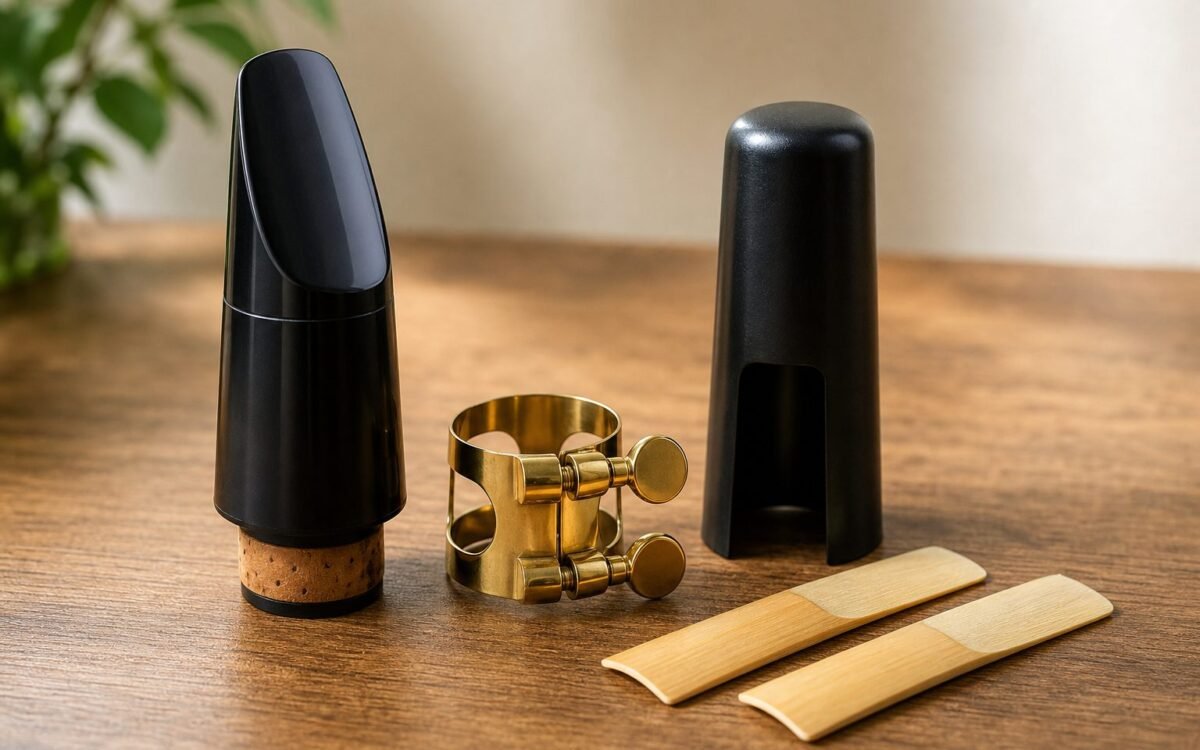
Choosing a saxophone reed: which strength is right?
Which saxophone reed strength suits a beginner? What the numbers mean, how to tell a reed is too hard or too soft, and how to rotate and store reeds properly.
If the saxophone is the body, then the reed is the vocal cords — that fragile sliver of cane is what actually vibrates and makes the sound; the horn only amplifies it and colours it. And yet it is the part beginners think about least: they spend a fortune on an instrument and then play the single reed that came in the box from the day they opened it, and when the sound goes choked or buzzy they blame the horn, or themselves.
This article gathers everything a saxophone player needs to know about reeds — picking a strength, recognising one that does not suit you, and the habits every long-time player has.
What does the reed number mean?
The number on the box (1.5 — 2 — 2.5 — 3 — 3.5…) is the strength of the cane: the higher the number, the harder the reed, and the more air it takes to make it vibrate.
- Soft reeds (low numbers): easy to make speak, good for beginners — but too soft and the sound buzzes, turns harshly bright, and the pitch wanders when you play loudly.
- Hard reeds (high numbers): a thick, settled sound with good control of dynamics — but they demand a strong air column. Without one, a hard reed is hard to get a note out of, tiring, and choked.
One thing many players do not know: the same number is not the same strength across brands. One maker’s 2.5 can be another’s 3, so when you switch brands, start half a step lower rather than carrying your old number across unchanged.
Where should a beginner start?
My answer after years of teaching: a 2 or a 2.5 on alto is a safe starting point for most beginners (tenor is similar, leaning towards 2 if your air is not yet strong). The reason is simple — in the early stage the first priority is building the air column and the embouchure, and a reed that matches your strength lets you concentrate on that instead of fighting just to make a sound.
Over time, as your air gets stronger, you will feel the old reed go “light” — the sound starts to buzz when you fill it, and dynamics get hard to control. That is the signal to move up half a step (2 → 2.5, 2.5 → 3). Do not jump a whole number; half a step at a time lets the embouchure adapt. Most of my students take their first step up after four to six months.
Signs the reed does not suit you
A quick self-diagnosis table — worth pinning up in the practice corner:
| Symptom | Most likely |
|---|---|
| Hard to make speak, you have to force it; lip and throat tire fast; low notes almost mute | Reed too hard |
| Buzzy, thin and harshly bright; pitch unstable when loud; attacks squawk | Reed too soft |
| Fine yesterday, completely different today | The reed is worn or has soaked unevenly — change to another one |
| A rasp with an unpleasant scraping feel | The tip is chipped — bin it, without regret |
An important caveat: before you convict the reed, make sure your embouchure is not the culprit — biting too hard produces symptoms identical to a reed that is too hard. The simplest way to tell them apart is to have a teacher play that same reed, or bring it to a trial session and hear it directly.
The reed habits of experienced players
A few small habits separate experienced players from beginners, and none of them cost anything:
Rotate three or four reeds. Do not play one reed to death before opening the next. Cane is a natural material — each piece has its own character, and reeds need to rest and dry evenly between sessions. Number them and use one per session in rotation: the reeds last longer, and more importantly your ear learns to hear the difference between them, which is a valuable listening skill in itself.
Wet the reed before playing, dry it before storing. Thirty seconds to a minute in the mouth (or dipped in clean water) before you fit it; after the session wipe it gently and store it in a proper reed case with a flat surface rather than dropping it back into the flimsy plastic sleeve. A reed that has dried warped is the number one reason for “great yesterday, terrible today”.
Know when to let go. A reed in regular use lasts roughly one to three weeks depending on how hard you play. The signs of retirement: the colour turns a deep yellow, the sound goes dull and loses its spring even when properly moistened. Reeds are a consumable — hanging on to an old one costs you a week of practising with the wrong sound.
What about the mouthpiece?
The reed and the mouthpiece are a pair — the tip opening of the mouthpiece decides which reed strength works best on it. The short rule for beginners: use the mouthpiece that came with the horn (or a standard student mouthpiece) with a 2 to 2.5 reed, a combination that has been proven many times over. Do not rush into buying the “professional” mouthpiece your hero plays while your foundation is still forming: a wider tip opening demands air and an embouchure a beginner does not yet have, and the result is usually the opposite of what was hoped for. Choosing a mouthpiece at a higher level deserves its own article.
The right reed is not the most expensive one; it is the one you can forget about — fit it, the sound comes out comfortably, and your whole mind is free for the music. If you are just starting and unsure about both which horn to choose and which reed, bring all of it to a free trial session at MSax – Lê Duy Mạnh Saxophone Center — 39 Hào Nam, Đống Đa, Hanoi. Try a few different strengths there in the room, and you will hear the answer faster than ten articles can tell you.