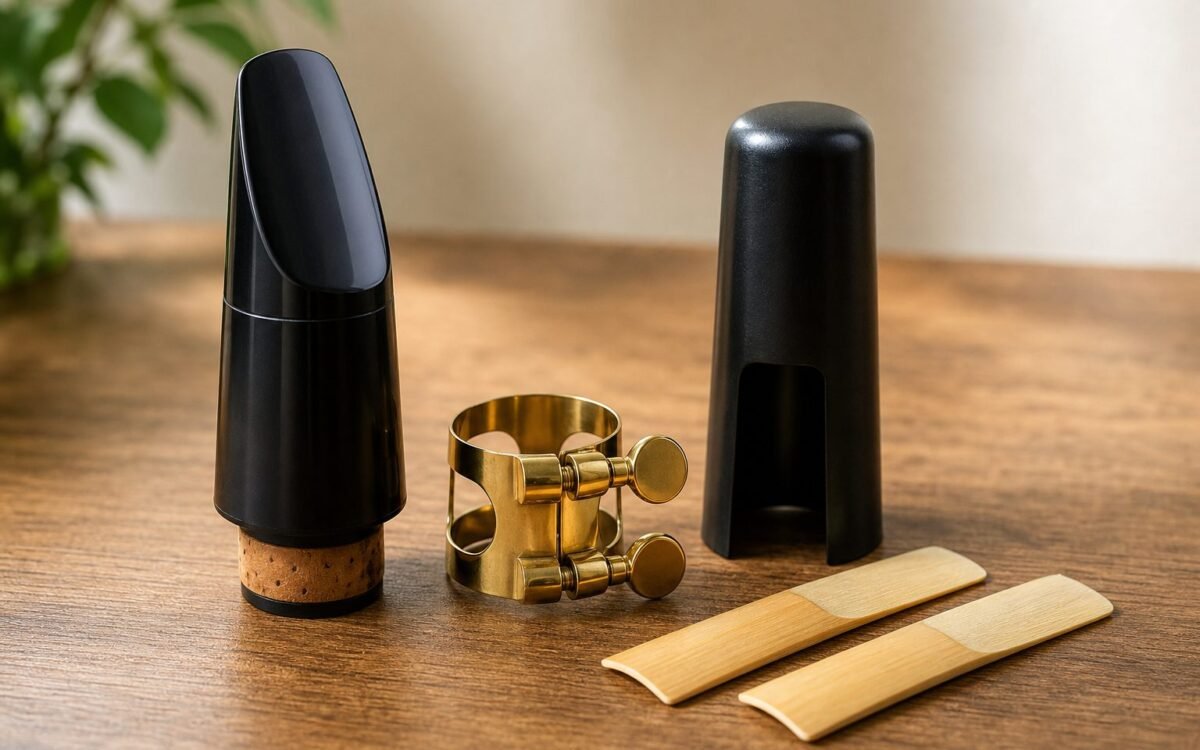
Choosing a reed and mouthpiece as a beginner
How to choose a reed and mouthpiece as a beginner: which strength to start from, when to change, and the guesswork purchase that leaves your tone choked.
Getting the reed and the mouthpiece right at the start makes the horn easier to sound, less tiring to play, and much easier to stay interested in. Choose something too demanding, or buy on a hunch, and you end up blowing and blowing with nothing coming out, a choked tone, and the conclusion that you have “no talent for it”.
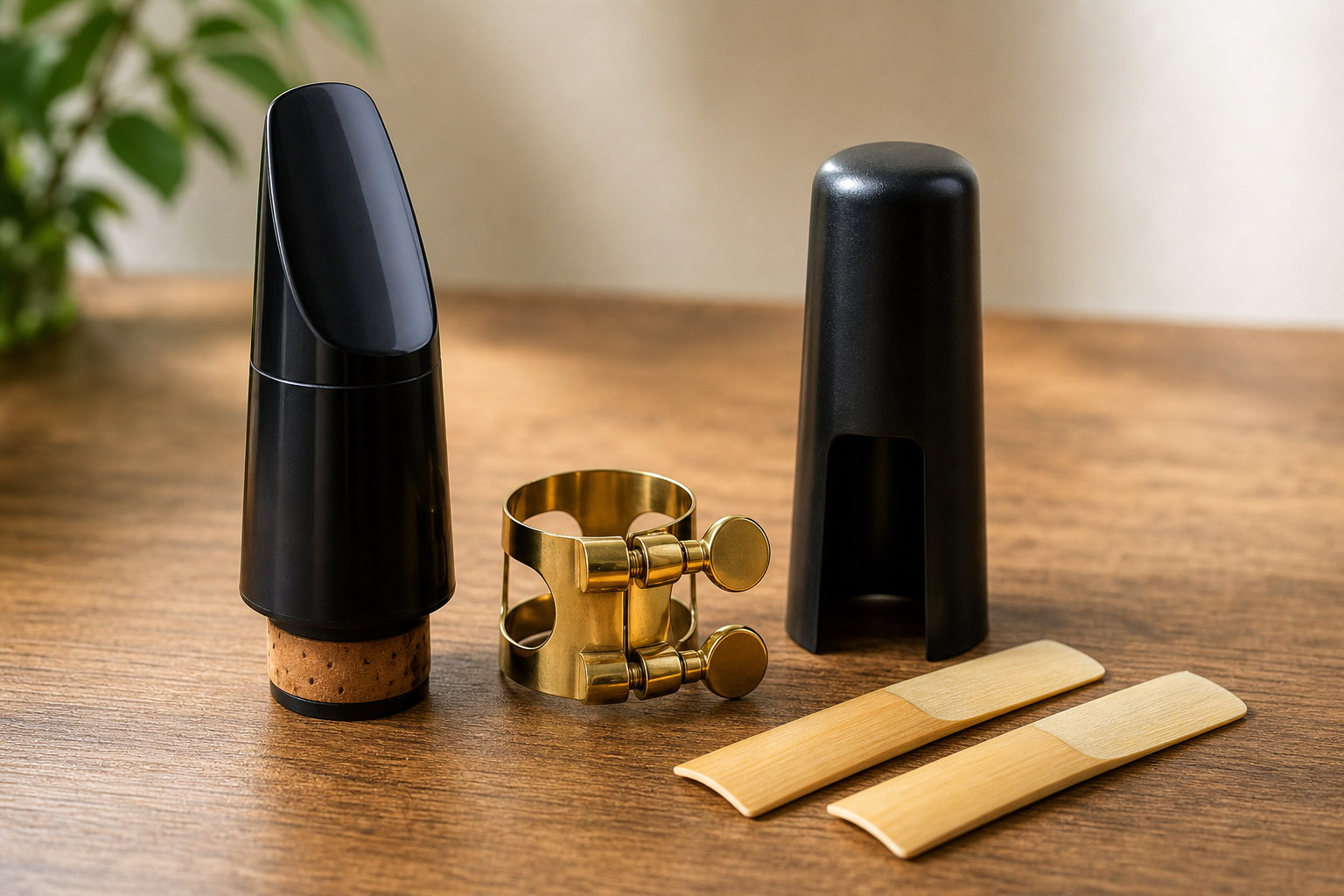
Why the reed and mouthpiece matter so much at the start
On the saxophone the reed is the part that vibrates to make the sound, and the mouthpiece is where the reed is mounted — the component that most directly affects how easy the horn is to blow, how controllable it is, and how it feels to produce a note. Yamaha’s instrument-selection guide notes that the mouthpiece has a large effect on both playability and tone: yamaha.com.
Beginners often assume a decent horn is enough, but in practice it is the reed-and-mouthpiece pair that decides whether the sound comes easily. A mouthpiece that is hard to control, or a reed that is too stiff, will choke the air, tire the lip quickly and make low notes hard to reach. At that point the fault is not really in your technique — it is that the equipment does not match the stage you are at.
For a beginner the aim should be clear: prioritise stability, an easy response, and equipment that lets you build correct breathing habits. This is why “choose safe to begin with” usually beats “choose what sounds better on paper”.
Choosing a reed strength that is easy to play
Reed strength is the first thing to understand. According to D’Addario, softer reeds generally speak more easily but can be less stable in some situations, while harder reeds can feel more settled but demand better air and embouchure control. That is why a beginner is usually better starting at the easy end rather than reaching for something heavy.
Selmer makes the related point that there is no single “correct” strength for everybody, because the choice also depends on the mouthpiece, on how you blow and on personal feel. In other words, two beginners can suit two different strengths if their mouthpieces or their air differ.
When starting out, these are safe principles:
- Favour a reed that responds early, without forcing the air.
- If notes are hard to start, the sound is choked and your lip tires fast, the reed may be too hard.
- If the sound is thin, buzzy or hard to control, the reed may be too soft.
- Do not judge after a few seconds of playing; try long tones, note changes and short articulated notes.
A concrete example: if you have to tighten your lip to hold a long note, the problem is probably not “not enough strength” but a reed that does not suit you. For a beginner, “it plays straight away with moderate control” is a more trustworthy signal than “it is difficult, so it must be more professional”.
Choosing a safe mouthpiece to start on
When it comes to the mouthpiece, beginners are often drawn to options promising a big, bright or characterful sound. But at the start what you need most is controllability. As Yamaha notes, the mouthpiece has a strong effect on playability, so a beginner should prioritise something that speaks easily and is easy to control rather than chasing a “special” feel.
A safe starting choice is usually a standard mouthpiece that is easy to blow and does not demand much of your air or embouchure. Without experience, do not follow general advice of the “a wider opening sounds better” or “harder makes you improve faster” kind. Those choices only make sense once your embouchure is settled and you know what sound you are after.
Signs a mouthpiece suits a beginner:
- It speaks fairly easily across the basic notes.
- It does not force you to bite or tense the lip to hold the sound.
- On long tones the sound stays steadier.
- When you change reed, the difference is still within your control.
An easy way to picture it: if you try two mouthpieces and one makes the first note speak more naturally, with less effort, that is a far better sign than the one that sounds “impressive” for a few seconds.
Common mistakes: buying too early, or choosing something too demanding
The most common mistake is buying for a long-term goal rather than for your current ability. Beginners often think a hard reed or a demanding mouthpiece will “speed things up”. In practice it usually slows the learning, because you are wrestling with the equipment before you have built any technique.
The second mistake is changing too much, too soon. A new reed today, a new mouthpiece tomorrow, and by the weekend it must be the horn. When everything changes at once, it is very hard to know what was actually causing the difficulty. For a beginner, stability matters more than breadth of experiment.
The third is buying purely on someone else’s verdict. What suits an experienced player may not suit a beginner at all. As both Selmer and D’Addario make clear, how an instrument plays depends heavily on the combination of reed, mouthpiece and player.
The safer approach is to test in a very specific context: the same horn, the same exercise, and a short but sufficient stretch of time to notice a difference. Do not judge on one high note or one improvised phrase.
How to test before you commit
When trying a reed-and-mouthpiece setup, start with a simple test. Play a long note in a comfortable register, then move slowly between a few adjacent notes, then try some short articulated notes. The question is which combination feels less forced, more repeatable and more stable.
An effective method is to change only one thing at a time. Keep the mouthpiece and change the reed, and see how the response differs. Or keep a reed you know and try a different mouthpiece. Change both at once and you will not know what made the difference.
Note down very specific signals:
- Does the first note speak quickly?
- After a few minutes, is your lip unusually tired?
- Do the low notes choke easily?
- When you play softly, does the sound hold?
If someone experienced can listen in person, so much the better — a beginner usually only registers that something is “hard” without being able to tell whether the difficulty comes from the air, the embouchure or the equipment. Without a teacher, keep the criterion simple: choose the setup that lets you practise consistently with a steadier sound.
In short
For a beginner, choosing a reed and mouthpiece does not need to be complicated, but it does need to point the right way. Favour a reed at the easy end, avoiding anything that makes you force the air or clamp the lip. For the mouthpiece, start with something safe, controllable and easy to sound rather than buying an “upgrade” too early.
The practical advice is not to buy out of pride, and not to follow the rumour that harder is better. Test step by step, change one thing at a time, and watch the real response on long tones, note changes and short articulation. If a setup makes the horn easier to sound, less tiring and more consistent to practise on, it is the right one for where you are. There is more on the numbers themselves in choosing a reed strength.