Which saxophone should a beginner start on? Alto, tenor or soprano
Alto, tenor or soprano — which saxophone should a beginner start on? A comparison by build, by the music you love and by budget, from teaching more than 300 students.
Every first consultation with a new student opens with the same question: “What horn should I buy?” I always answer it with a question of my own: “What do you want your playing to sound like?” — because choosing a saxophone is not about which one is easy and which one is hard. It is about which horn will keep you interested long enough to get through the first stretch.
Nearly twenty years with the instrument and more than 300 students later, here is what I have settled on about each horn for a beginner.
Who is in the saxophone family?
The saxophone is a large family, but four members are the ones you will actually meet:
- Soprano — the smallest in common use, straight-bodied (or slightly curved), bright and high, the sound most people know from Kenny G.
- Alto — mid-sized, comfortable to hold, warm and bright in equal measure. This is the most common horn for learners in Vietnam.
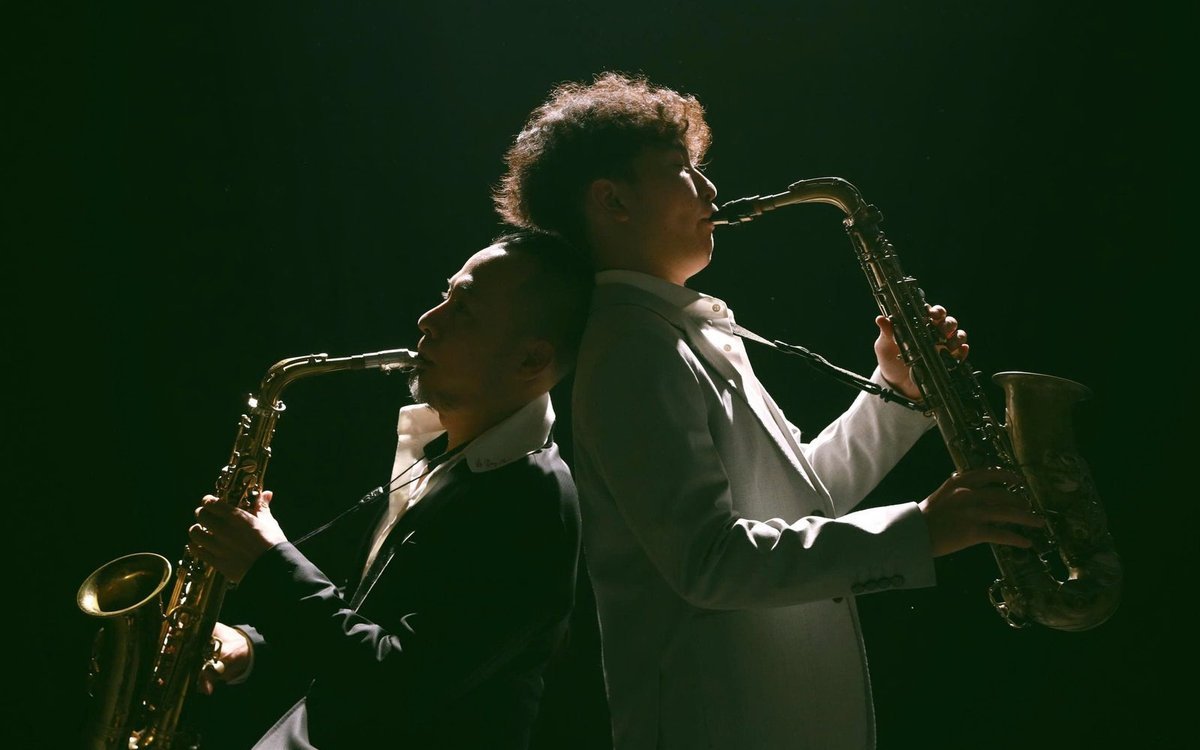
- Tenor — one size up from the alto: lower, thicker and smokier, the voice of jazz and of ballads.
- Baritone — the largest and heaviest in common use, mostly a big-band instrument, and almost nobody starts on it.
In practice a beginner is choosing between the first three, and most of the conversation is alto versus tenor.
Alto — the safest place to start
If you want one short answer for most people, it is the alto. Three very practical reasons:
It asks for a moderate amount of air. The alto does not need the long air column a tenor does, so in the first months — while you are still learning to breathe from the belly — you will hold a steady note sooner, and the feeling of “I can do this” arrives sooner. Do not underestimate that: most people who quit in the first three months do not lack talent. They simply never got to hear a decent sound come out of their own hands.
The body is compact and the keys sit close. For children, for anyone with small hands, for older beginners, the alto key spacing is markedly more comfortable. My youngest student started in year four of primary school and could still hold an alto properly.
It has the most teaching material. Almost every beginner method — including the one I wrote for my own beginner course — is written for alto first. Backing tracks, minus-one recordings and other players to play alongside are all easier to find.
On repertoire the alto is wide enough for pop ballads, Vietnamese love songs and standard jazz — which means you can start before you know what you like, and still be safe.
Tenor — if you have fallen for the low, warm sound
There is one kind of student I will tell outright to start on the tenor: the person who came to class because of one particular tenor sound — the horn in “Careless Whisper”, the smoke in Stan Getz, or the ballads where the saxophone sounds like a man telling you something.
Because the truth is this: the horn that matches your taste keeps you playing better than the horn that is easy to blow. The tenor asks for a longer air column, it is heavier (you will want a good strap), and the first few weeks will be harder than they would have been on alto. But if every day you get to hear the sound you dreamed of coming out of your own horn, that difficulty is worth paying for.
My experience: anyone of average build or larger, with decent lung capacity — people who swim or play sport usually have an advantage — can begin on tenor without going the long way round through alto.
Soprano — beautiful, but not yet
The soprano is small and light, so people assume it is easy. In fact it is the hardest of the three to keep in tune. The narrow bore exposes every tiny change in your embouchure and air immediately — and a beginner, without a trained ear or a settled air column, will struggle to hold a note at pitch.
My advice: let the soprano be your second horn. After a year or so on alto or tenor, once your breathing and your ear are solid, come back to it and you will find it far sweeter. That is the road I took myself.
A quick comparison
| Criterion | Soprano | Alto | Tenor |
|---|---|---|---|
| Ease for a beginner | Hardest | Easiest | Moderate |
| Air required | Moderate (but hard to control) | Moderate | A lot |
| Weight | Light | Medium | Noticeably heavier |
| Character | Bright, high, slender | Warm and bright, balanced | Low, thick, smoky |
| Suits | Players with a foundation | Most beginners, children | Lovers of jazz and low ballads, strong lungs |
You do not need to buy a horn yet — try one first
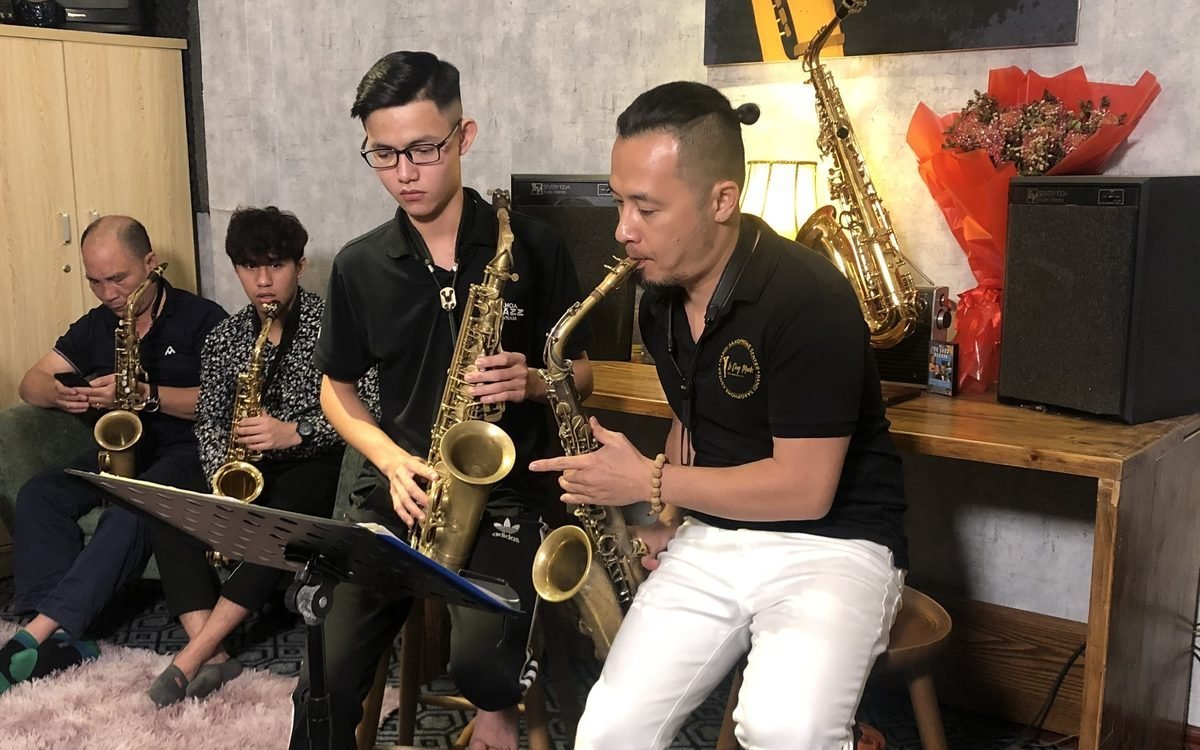
One last thing, and it is what I tell every new student: do not buy a saxophone before your first lesson. At my studio in Hanoi you can borrow a horn in the lesson itself — come and try, pick up both the alto and the tenor, play a few notes with a teacher next to you, and then decide. Plenty of people arrive certain they want a tenor, pick up an alto, and change their mind. And the other way round.
Once the horn is chosen, the next steps are picking a specific instrument and choosing the right reed strength — I have written separately about both.
If you are still unsure, the fastest way to settle it is a free trial session at the studio — bring exactly one thing with you: the piece you most want to be able to play. Let me hear the sound you are after and I will help you pick the right horn for your own road. MSax – Lê Duy Mạnh Saxophone Center, 39 Hào Nam, Đống Đa, Hanoi — or call 0389172879.