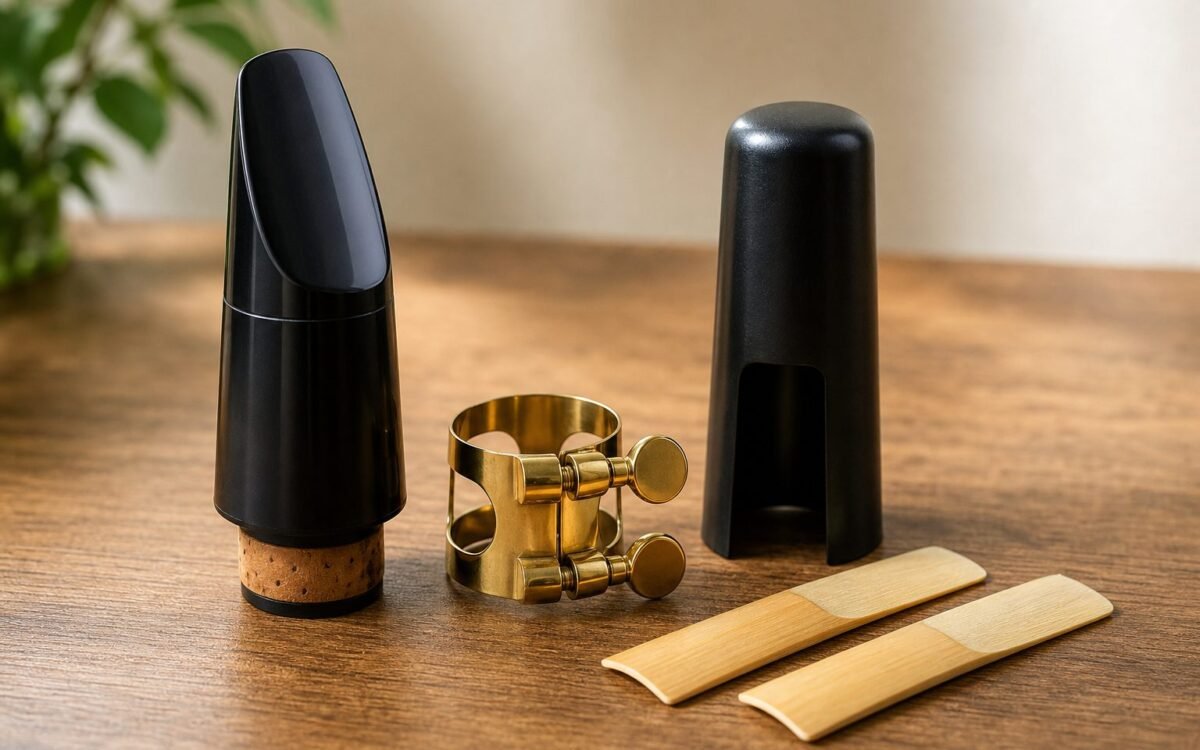
Cleaning and caring for a saxophone: after every session, every week, every year
Cleaning a saxophone after each session, each week and each year: keeping moisture from rotting pads and dulling the plating — the habits that keep a horn for years.
Most damage to a saxophone does not come from knocks. It comes from moisture — present in every breath, every day, for years.
When you play, your breath carries water that settles inside the body and on the pads. A horn put away damp will rot its pads, dull its plating and hold a smell. Nothing breaks within a week, which is exactly why this gets skipped until something has to go to a repairer.
After every session: about three minutes
The most important part, and the shortest.
- Take the reed off first. Left on the mouthpiece it holds moisture, warps and dies early. Wipe it dry and store it in a flat reed case.
- Pull a swab through the body. Drop the weight in through the bell and pull it through a few times until the cloth comes out dry. The neck needs its own smaller swab — it collects the most water and is the most often forgotten.
- Wipe the outside with a soft dry cloth. Hand perspiration is mildly acidic and eats into the plating over time, most visibly where the hands rest.
- Do not close the case on a damp horn. Leave it open a few minutes until it is properly dry. A sealed case and a damp instrument are ideal conditions for mould.
If you only ever do one of those four, do the second.
Every week
Wash the mouthpiece in warm water. Warm, not hot: heat discolours ebonite and can warp it. Use a soft brush inside, then let it air-dry.
Clean the joints. Where the neck meets the body is where dust and residue collect, and it is what decides how well the instrument seals.
Check the keys quickly. Press each one and listen to it close. A louder clatter than usual usually means a worn bumper.
Every few months
Check the pads. Slide a thin piece of paper under a pad, close the key and pull the paper out. If it comes out too easily the pad is no longer sealing. Work through the keys you use most.
Retighten loose screws. Vibration works screws loose over time. Firm, not tight.
Oil the rods. One small drop at each pivot, then wipe away the excess. Surplus oil attracts dust and turns into a paste, so less is considerably better here.
Storage
- Away from heat and direct sun. Never in a car boot or against a window. Heat softens the glue holding the pads, and a lifted pad is one of the more expensive faults.
- Away from damp. Northern Vietnam’s humid season is a hard environment for a wind instrument. A sachet of desiccant in the case helps more than people expect.
- Always in the case. A horn on a stand looks good, but dust settling in the tone holes and on the pads is a real thing.
If it is going unplayed for a while, take it out and blow for a few minutes every couple of weeks. A horn left still for months usually needs adjusting when it comes out.
Three things not to do yourself
There is a clear line between maintenance and repair. These three belong to a technician:
- Straightening a bent key. Metal tolerates only so many bends, and each bad one makes the next harder.
- Replacing a pad. It requires setting height and seating angle; one pad fitted wrong throws out the whole cluster around it.
- Chemical polishing. Many polishes attack thin plating, and there is no way back.
When to take it in
Four signs to have it looked at rather than fix it yourself:
- A note leaks air even with correct fingering, especially low down.
- You have to bite harder than usual to get a sound.
- A metallic rattle when a key is pressed.
- The tone has changed noticeably and a new reed does not solve it.
That last one is worth dwelling on: many players work through reed after reed while the problem is a leaking pad. If you have tried several strengths and the sound is still wrong, read about choosing reed strength and what takes the warmth out of a tone before blaming the reed.
The thing worth remembering
Three minutes after each session is worth more than one big clean a year. Caring for a wind instrument is a matter of habit rather than of campaigns — and a horn that is dried out regularly will keep its sound far longer than an expensive one left damp in its case.